By Satyajit Roy. SurakshitBharatAbhiyan.org. 23 October 2025..
The Gross Domestic Loss Prevention (GDLP) framework, championed by initiatives like SurakshitBharatAbhiyan.org, is a crucial strategy for Indian citizens to ensure that the massive investments made by Indian Railways are preserved, thus saving GDP+ (preserved value). This is particularly vital in the context of the Amrit Bharat Station Scheme (ABSS), which is modernizing over 1,300 stations into ‘City Centres.’ The concept of Gross Domestic Loss Prevention (GDLP), particularly when applied to the Indian Railways, shifts the focus from purely generating Gross Domestic Product (GDP) to preserving value that would otherwise be lost through damage, inefficiency, or accidents. This “preserved value” is the GDP+ saved.
Citizen adoption of GDLP practices at railway stations directly mitigates financial losses from damage, delays, and accidents, ensuring the long-term utility of the new, world-class infrastructure.
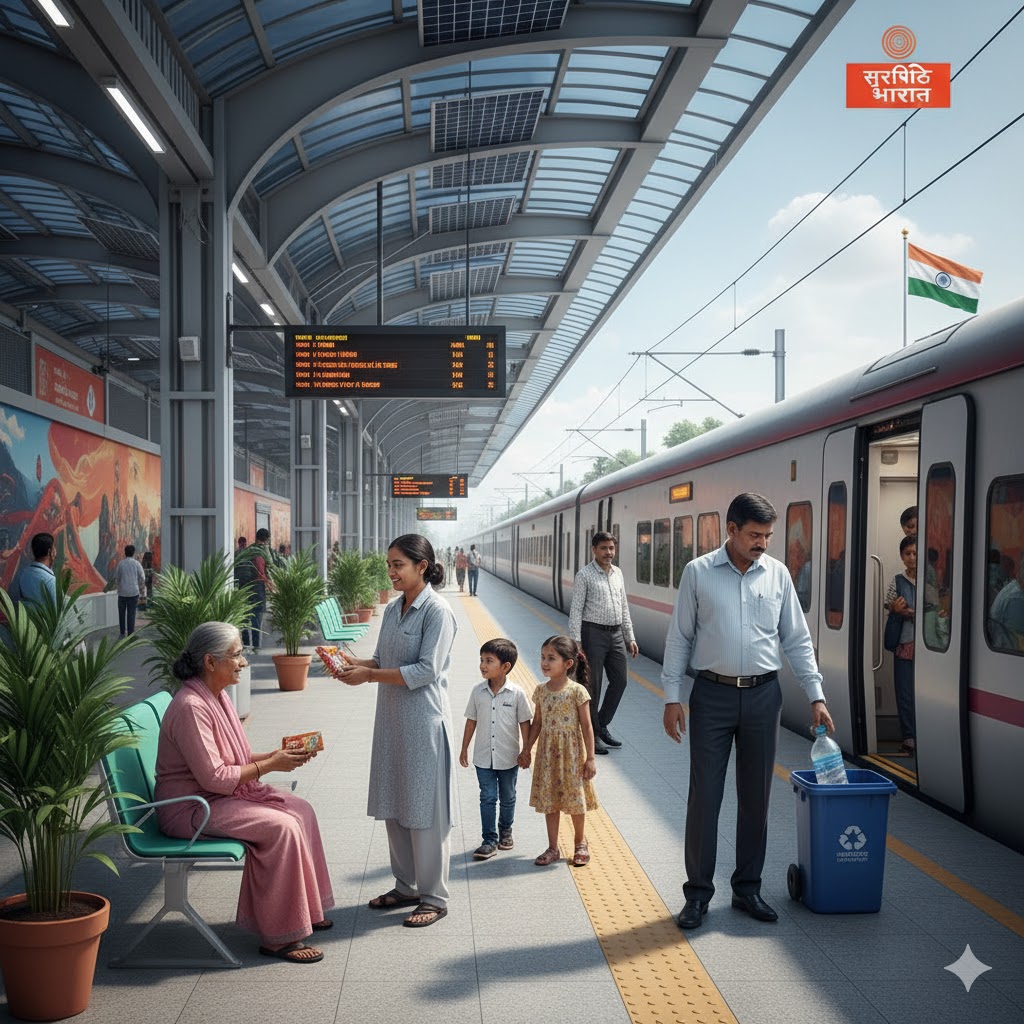
Ways citizens can help Indian Railways save GDP+ by adopting GDLP practices at stations:
The GDLP Imperative: Preserving GDP+ Value
GDLP shifts the national focus from only generating wealth (GDP) to preventing the loss of existing capital, revenue, and human potential (GDP+).
| Loss Area | Citizen GDLP Action | GDP+ Saved (Value Preserved) |
| Asset Damage | Refrain from littering, spitting, or vandalizing new infrastructure (walls, lifts, seats, digital displays). | Direct cost of cleaning, repair, and replacement; reduced annual maintenance budget. |
| Operational Delay | NEVER misuse the Alarm Chain Pulling (ACP) system for trivial reasons; avoid track trespass. | Cost of fuel wasted, loss of national productivity due and cascading network delays, and reduced enforcement resources. |
| Human Capital Loss | Strictly adhere to safety lines, use FOBs/subways, and do not board/alight moving trains. | Irreplaceable value of human life, reduced compensation payouts, lower burden on healthcare/emergency services. |
Enhancing Safety and Preventing Accidents
This is the most critical area of loss prevention, as it preserves human capital (the highest form of GDP+) and reduces the burden on state emergency and healthcare services.
| GDLP Practice | GDP+ Saved |
| Strictly Follow Safety Lines | Always stay behind the yellow line on the platform edge until the train comes to a complete halt. This prevents fatal falls onto the tracks. |
| Avoid Track Crossing | Use the designated Foot Over Bridges (FOBs) or subways instead of illegally crossing the tracks. Trespassing is a major cause of unnatural deaths, leading to the irreparable loss of human life and potential labor. |
| Boarding/De-boarding Discipline | Do not attempt to board or alight a moving train. This reduces fatal accidents, which can also cause delays and further economic loss. |
| Maintain Orderly Queues | Form orderly queues at ticket counters and during boarding. This prevents stampedes, injuries, and operational delays. |
Combating Revenue Leakage and Theft
Preserving revenue directly improves the Railways’ operating ratio, allowing more capital to be allocated for infrastructure modernization and safety upgrades.
| GDLP Practice | GDP+ Saved |
| Purchase Valid Tickets | Always buy the correct ticket before traveling. Ticketless travel is a direct revenue loss, forcing the Railways to divert resources to enforcement instead of service improvements. |
| Report Suspicious Activity | Proactively inform RPF/station staff about theft, pickpocketing, or unauthorized activities (like illegal vendors or beggars). |
| Secure Personal Belongings | Be vigilant to prevent theft, which reduces the need for extensive police resources and ensures passengers’ personal economic value is preserved. |
Ensuring Operational Efficiency
Preventing delays and disruptions ensures the smooth flow of both passenger and freight traffic, directly impacting national productivity and supply chains.
| GDLP Practice | GDP+ Saved |
| Responsible Chain Pulling | Do not misuse the Alarm Chain Pulling (ACP) mechanism for trivial reasons. Unnecessary chain pulling causes significant delays to the entire rail network (the “cascading delay effect”), costing the economy millions in lost time and fuel. |
| Report Irregularities | Immediately report any unattended baggage, track damage, or suspicious objects to railway staff. This prevents potential security threats and major operational shutdowns. |
GDLP Use-Cases at Modern Railway Stations
Modern railway stations, often serving as pilot projects or major hubs, showcase the direct relationship between new technology and GDLP.
| Station Example | Key Modernization Feature | Citizen GDLP Action | GDP+ Saved (Preservation Outcome) |
| Rani Kamalapati (Bhopal) | Airport-like concourse, dedicated parking, commercial zones (PPP model). | Maintain the cleanliness of the air-conditioned concourse; pay parking fees correctly to sustain the PPP model. | Preserves the revenue stream critical for long-term private maintenance and prevents structural damage. |
| Chhatrapati Shivaji Maharaj Terminus (CSMT, Mumbai) | UNESCO World Heritage Site, enhanced security, modern amenities. | Respect the historical architecture (no spitting/scratching); cooperate fully with baggage scanning and access control systems. | Preserves cultural heritage value and reduces security-related delays/incidents. |
| New Delhi Railway Station (NDLS) | Multi-modal connectivity (Metro integration), upgraded ticketing halls, digital information. | Use designated gates/subways for inter-modal transfer; do not obstruct new passenger movement flows or block exits. | Maximizes operational efficiency and protects the smooth flow of the high-traffic system. |
| Warangal Railway Station (Telangana) | Eco-friendly features, disabled-friendly infrastructure, comfortable seating. | Utilize Divyangjan facilities (ramps, toilets) only if eligible; maintain cleanliness to support the eco-friendly focus. | Sustains green initiatives and ensures critical accessibility infrastructure remains functional for those who need it. |
| Howrah Junction (Kolkata) | High-traffic volume, multiple platforms, retiring rooms/Yatri Niwas. | Ensure timely check-out from retiring rooms; refrain from loitering in critical high-density areas. | Improves asset utilization rate and reduces security/crowd management costs. |
By adopting these conscious behaviors, citizens embody the principles of GDLP, transforming simple civic responsibility into a significant contribution to national asset preservation, directly translating to millions saved in maintenance, accident compensation, and efficiency losses, thereby preserving the nation’s GDP+.
Further, as a responsible custodian of the Amrit Bharat Station infrastructure, the citizen transforms from a passive passenger to an active partner in the Surakshit Bharat mission, ensuring that the modernization drive is not just a one-time expense but a sustainable, long-term national asset that continually saves GDP+.