Satyajit Roy – for Surakshit Bharat Abhiyan
For several years, through my articles and observations on the Surakshit Bharat Abhiyan platform, I have consistently highlighted that India’s labour ecosystem is undergoing a fundamental transformation. What many businesses considered a temporary post-pandemic disruption is now emerging as a long-term structural reality.
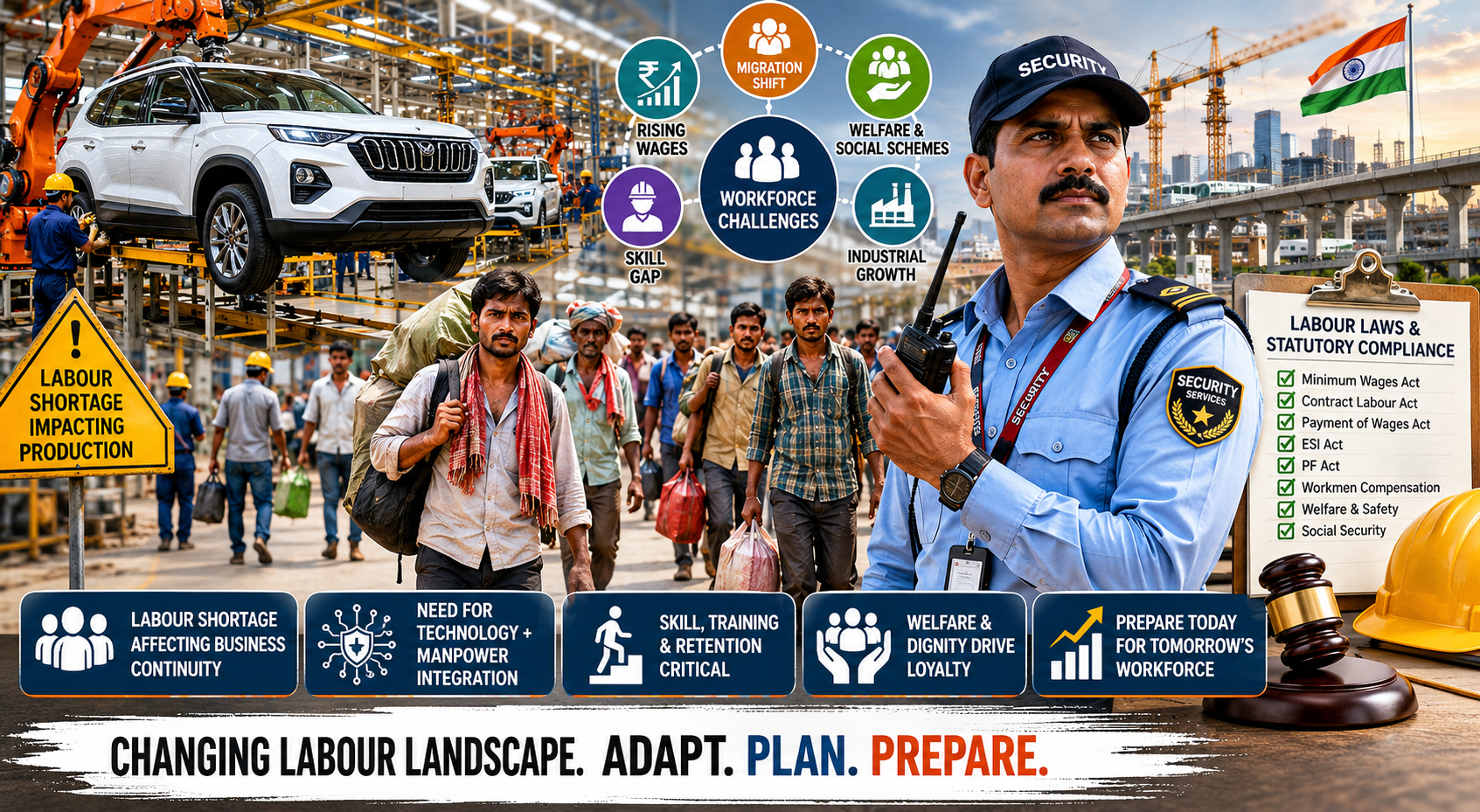
Recent reports of production disruptions in major manufacturing sectors due to labour shortages only reinforce this trend. Rising minimum wages in several states, improved rural livelihood opportunities, welfare schemes, infrastructure expansion, gig-economy employment, self-employment models, and localised industrial growth are reducing traditional migrant labour flows into established industrial clusters.
Historically, Indian industry benefited from abundant, low-cost, mobile labour. That advantage is steadily diminishing. Workers today seek better wages, dignity, work-life balance, proximity to family, social security, skill enhancement, and career progression. Employers who fail to adapt will face increasing manpower shortages, higher attrition, and operational disruptions.
Looking ahead, the situation is likely to intensify. The Government of India and State Governments are simultaneously pursuing aggressive infrastructure development, manufacturing expansion, logistics corridors, smart cities, industrial parks, defence production, energy transition projects, railways, ports, airports, housing, and urban renewal missions. These projects will compete fiercely for the same labour pool, especially skilled and semi-skilled manpower.
𝗔 𝗦𝗽𝗲𝗰𝗶𝗮𝗹 𝗡𝗼𝘁𝗲 𝗳𝗼𝗿 𝗦𝗲𝗰𝘂𝗿𝗶𝘁𝘆 𝗚𝘂𝗮𝗿𝗱𝗶𝗻𝗴 𝗖𝗼𝗺𝗽𝗮𝗻𝗶𝗲𝘀
The security guarding industry should treat this as an early warning signal. Traditionally dependent on migrant manpower, the sector may face increasing challenges in recruitment, retention, attendance, deployment stability, and wage competitiveness. Guarding companies must move beyond the conventional manpower-supply model and invest in technology-enabled guarding, workforce welfare, skill development, digital supervision, command-and-control systems, remote monitoring, and productivity enhancement. The future belongs to organisations that can deliver “more security with fewer people” through smart integration of manpower and technology.
From a national perspective, this labour transition is not necessarily negative. It is a sign of rising economic opportunities, improved worker bargaining power, and expanding regional development. However, businesses must prepare now for a future where labour will be increasingly scarce, skilled, mobile, and selective.
The question is no longer whether a labour shortage is coming. The question is: Is your organisation prepared for it?
#LabourMarket #IndiaGrowthStory #ManufacturingIndia #ViksitBharat2047 #WorkforceTransformation #HumanCapital #IndustrialDevelopment #SkillIndia #SecurityIndustry #SecurityManagement #GuardingServices #TechEnabledSecurity #SurakshitBharatAbhiyan #FutureOfWork #InfrastructureGrowth #BusinessStrategy #Leadership #Productivity #LossPrevention #SatyajitRoy
Reference: Recent industry reports indicate labour shortages affecting manufacturing output, reflecting broader changes in migration patterns, wage structures, and workforce availability across India’s industrial ecosystem.