by Cdr. Satyajit Roy, 11 March 2026
#NationalSecurity #EconomicStrategy
As India marches toward its ambitious goal of a $5-trillion economy, the global spotlight is fixed firmly on our production capability. Our Gross Domestic Product (GDP)—the measure of every car manufactured, every service rendered, and every software code exported—is the definitive pulse of our economic momentum. We celebrate growth, and rightly so.
But as a nation focuses intensely on what it builds, we must also ask a critical, yet overlooked question. Are we protecting what we have already built?
While we have robust metrics for production, we possess no consolidated national index for preservation. For every step we take forward in GDP, how many steps are we forced back by preventable systemic losses?
This crucial gap is why I am introducing a new strategic framework, designed specifically for the unique vulnerabilities of a rising India. Gross Domestic Loss Prevention (GDLP).
- Defining GDLP. The Alter Ego of GDP
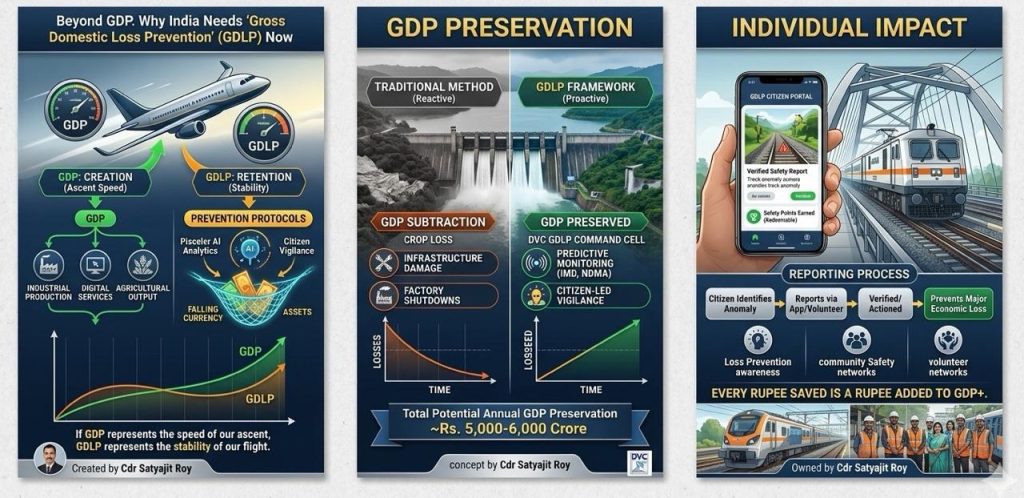
- GDP measures creation; GDLP measures retention. They are two sides of the same economic coin.
- GDLP is a systematic conceptual framework and statistical index designed to identify, quantify, and mitigate national-scale losses that erode our aggregate wealth. It is the vital counterweight that ensures our economic gains are resilient and sustainable.
- If GDP represents the speed of our ascent, GDLP represents the stability of our flight.
Where is the Leakage? The Case for GDLP
The current economic architecture focuses on remedial action—fixing problems after they have occurred. GDLP shifts this paradigm to proactive preservation. It addresses systemic losses that are often absorbed silently by the state or the consumer, yet significantly damage national wealth. These losses manifest in several critical sectors.
1. Industrial and Supply Chain Disruption
The theft of finished goods, pilferage of raw materials, and large-scale cargo manipulation are not just corporate problems; they are drains on national resources. Systemic losses in logistics increase the cost of doing business, reduce competitiveness, and ultimately inflate prices for the common citizen.
2. Digital and Intellectual Vulnerability (Cyber Security)
In a rapidly digitizing economy, our data is an asset. The theft of intellectual property (IP), large-scale data breaches, and ransomware attacks on critical infrastructure are direct assaults on our GDP. When a production facility is shut down by a cyberattack, that is a direct GDLP failure.
3. Infrastructure and Utility Management
Power theft, water leakage through aging infrastructure, and suboptimal management of public utilities represent significant asset devaluation. These are preventable losses that strain the national exchequer and impede the distribution of essential services to the underserved.
4. Resource and Agricultural Waste
Post-harvest losses—food rotting due to poor cold chains or inefficient storage—are perhaps the most tragic form of national loss. It is a waste of water, labor, and capital, undermining our food security while we strive to increase agricultural GDP.
The GDLP Solution. A Framework for Resilience
The GDLP framework proposes the creation of a standardized GDLP Index. Similar to how GDP is calculated quarter-by-quarter, this index would provide a health check on the state of India’s asset preservation. A rising GDP paired with a high GDLP Score means India is truly moving forward. A rising GDP with a low GDLP Score indicates we are leaking wealth as fast as we are creating it.
Implementation relies on three strategic pillars.
- Technology-Driven Protocols. Implementing advanced monitoring systems, like AI-powered analytics (our proprietary ‘Pixceler’ system) and predictive modeling, to spot and prevent loss before it manifests in high-value industries.
- A Unified Standard. Establishing nationally recognized loss prevention protocols that industries and government entities can adopt.
- Public-Private Partnership. Collaboration between the state (national security, infrastructure) and the private sector (digital assets, supply chain) to build a unified defensive wall around national value.
Conclusion. A Secure Foundation for a New India
Under the Surakshit Bharat Abhiyan, we often discuss security in terms of border defense or internal policing. It is time we expand that definition to include economic security.
GDLP is not merely an academic concept or a corporate compliance tool. It is a strategic imperative. As we scale new economic heights, our commitment to preserving our resources, our digital assets, and our industrial output must match our ambition to produce.
To build a truly self-reliant (Atmanirbhar) Bharat, we must ensure that the fruits of our labor are not just produced but preserved. We must look beyond creation and embrace protection.
GDP shows how we grow; GDLP shows how we endure.
(Join the discussion on the future of India’s economic security. Follow SurakshitBharatAbhiyan.org for updates and deep dives into the GDLP framework.)